Good marketing isn’t about getting more clicks. It’s about making better decisions.
This Google Ads campaign case study shows how EVD• Marketing used search intent, campaign restructuring, GA4 tracking, and performance data to make evidence-led optimization decisions.
Every project is built around one goal: helping businesses make smarter marketing choices through research, strategic thinking, and measurable performance. These case studies show not only what was done, but why it mattered.
Google Ads Campaign Case Study
Building a Google Ads campaign from the ground up.
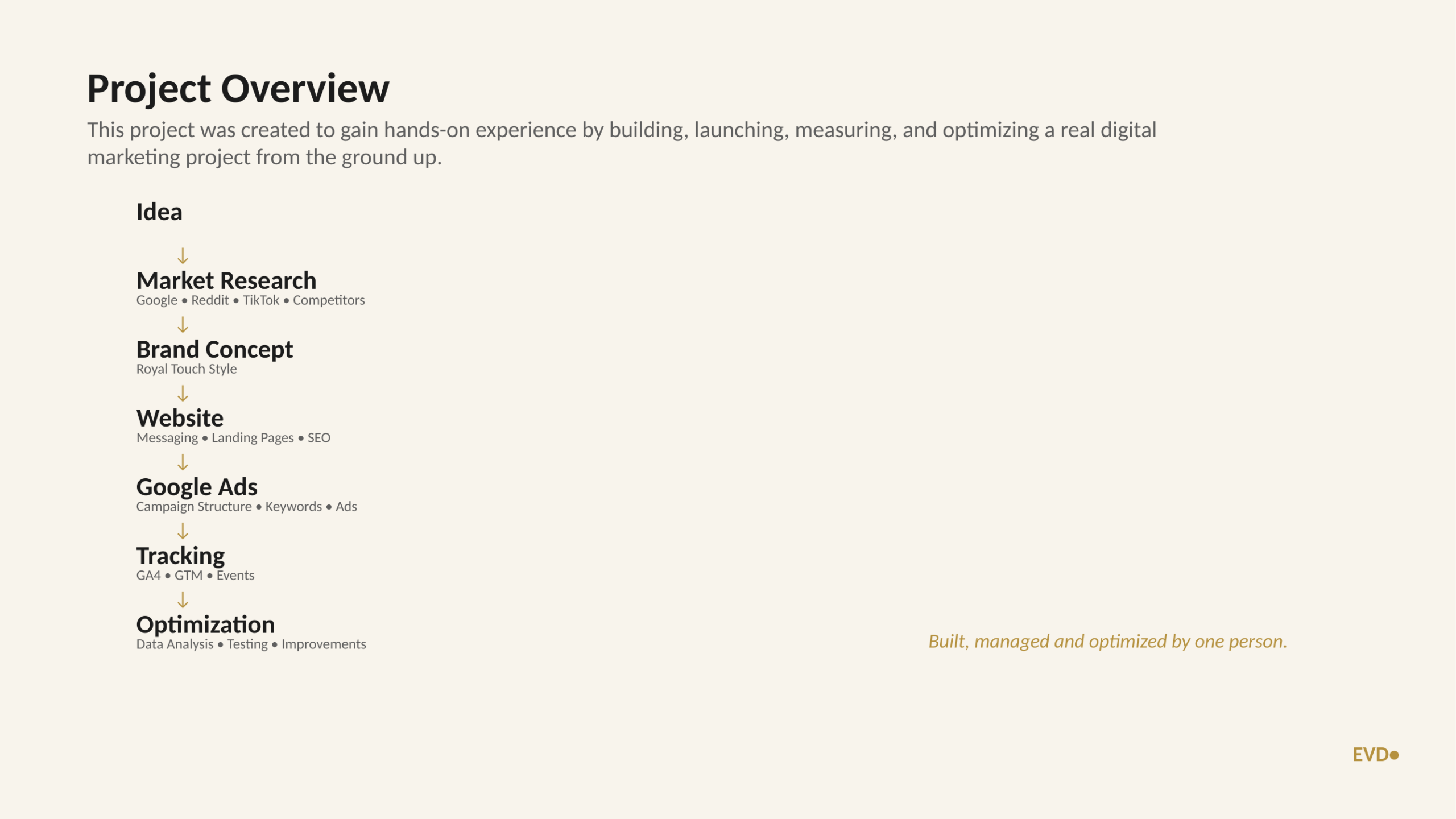
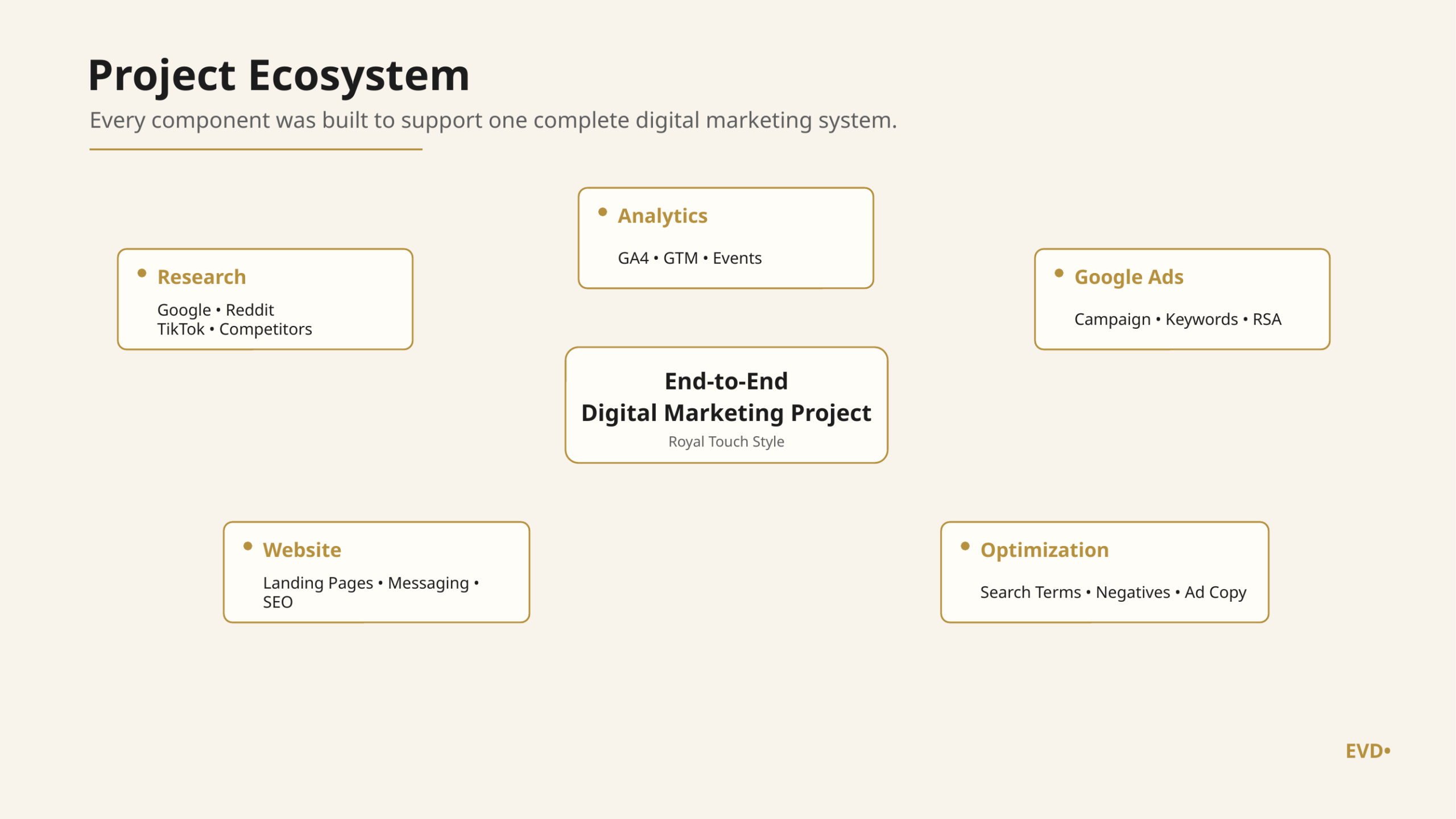
Designed, launched, and optimized an end-to-end Google Ads campaign using real performance data to guide strategic decisions. The project focused on search intent, campaign structure, conversion tracking, and continuous improvement.
Project Walkthrough
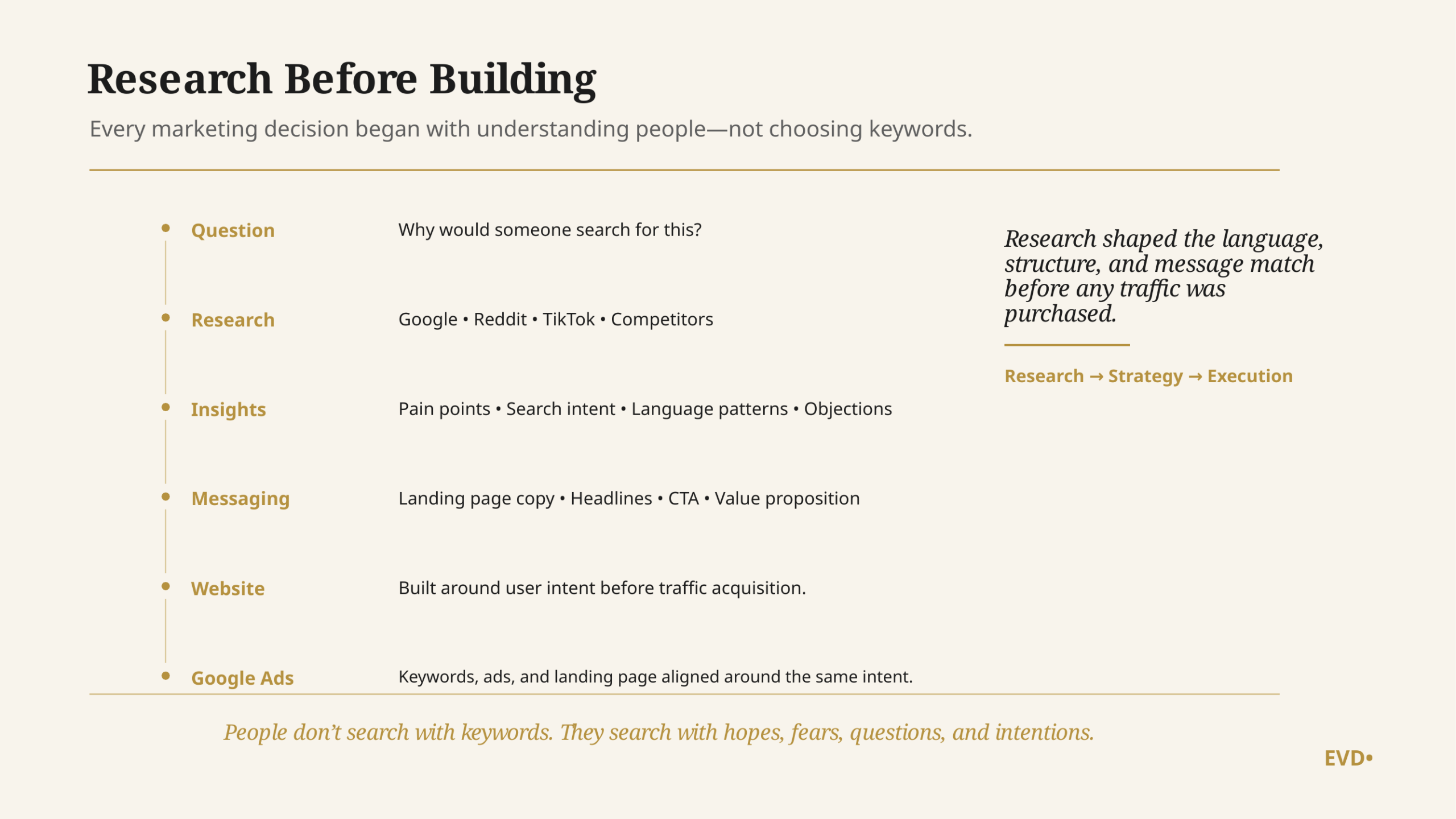
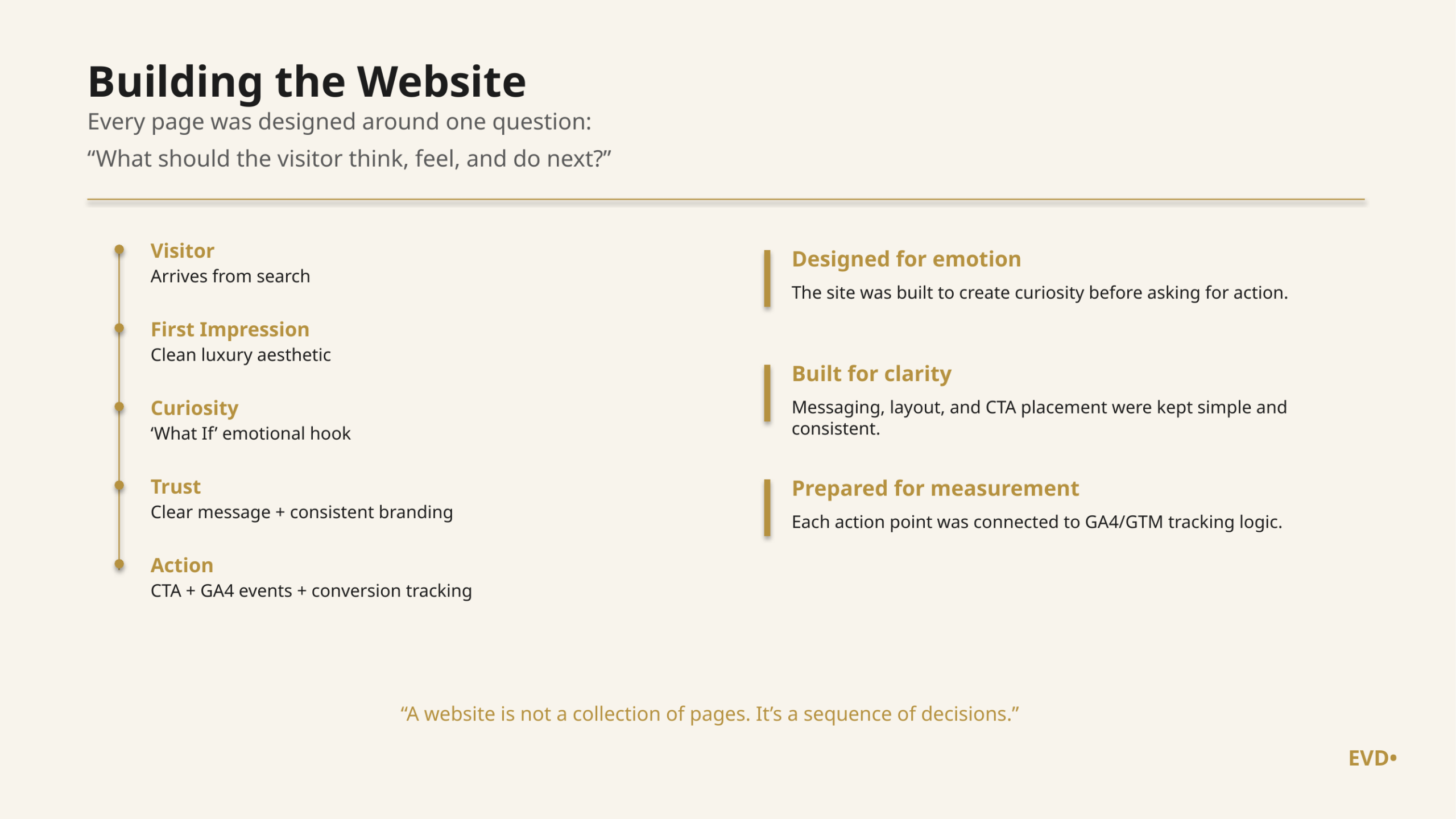
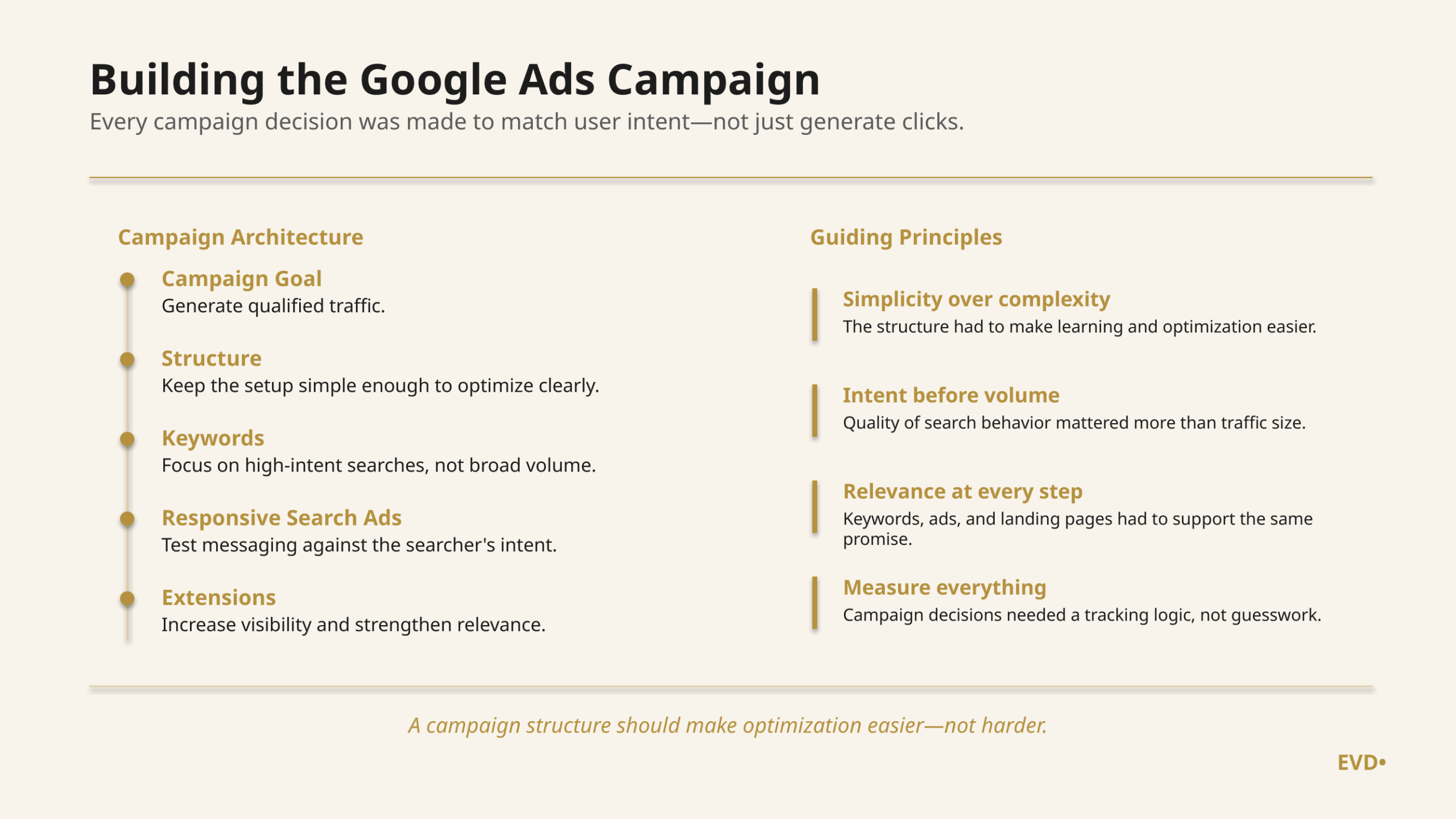
Selected presentation slides used to document the strategy, execution, and optimization process throughout the project.
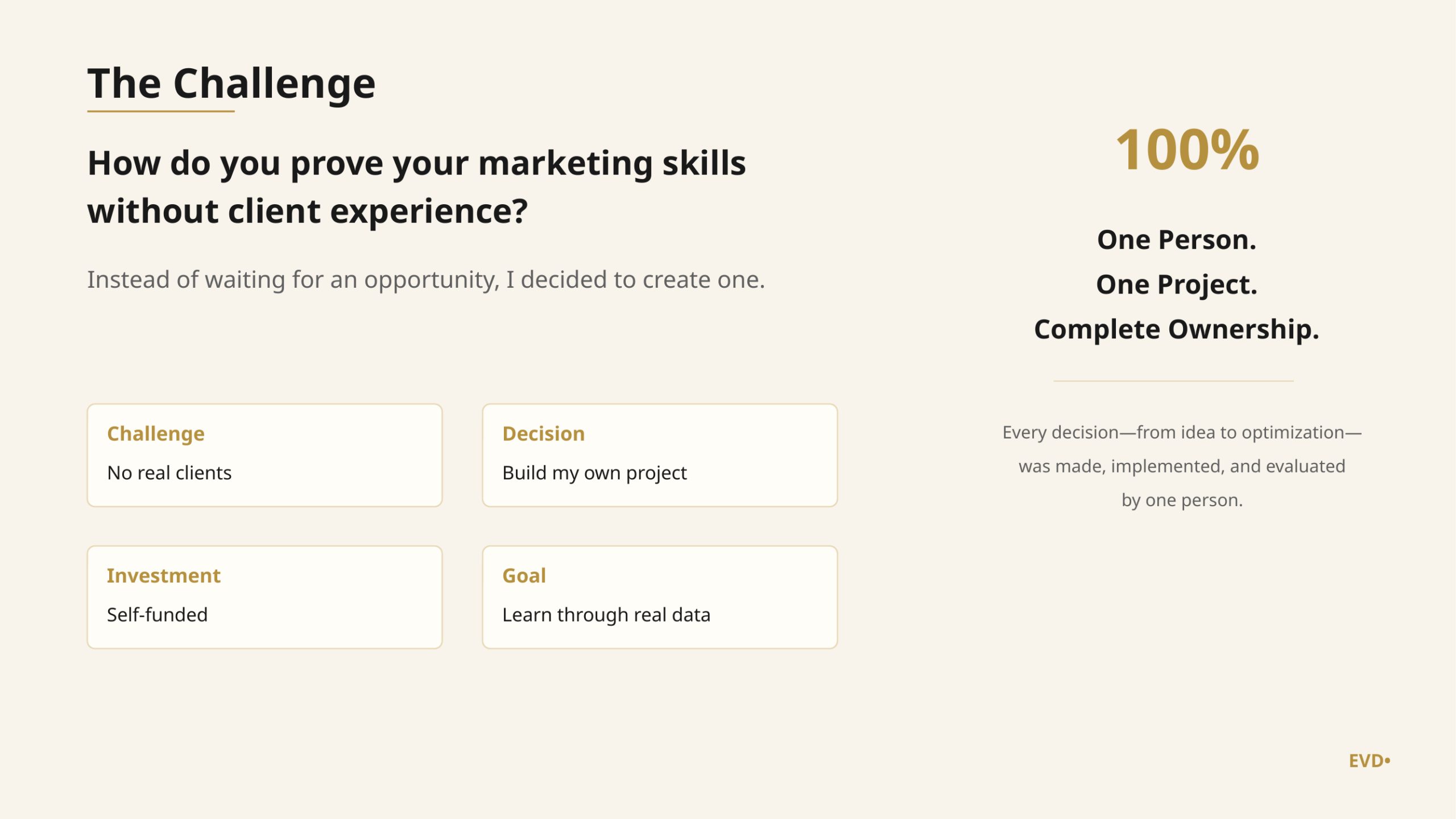
The Challenge
Starting with a blank page.
This project began with a simple challenge: build a Google Ads campaign from scratch, make every decision intentionally, and evaluate success using real performance data rather than assumptions.
The Strategy
A campaign built around intent, not guesswork.
The strategy began with understanding what people were actually searching for, how closely those searches matched the offer, and where the strongest path from curiosity to action could be created.
Intent Research
Search themes were evaluated by relevance, commercial intent, and their ability to attract users who were genuinely aligned with the offer.
Campaign Architecture
Keywords, messaging, and campaign structure were simplified to create clearer signals, tighter control, and more meaningful performance data.
Message Alignment
Ad copy was developed to connect user intent with the value of the experience, rather than relying on generic promotional language.
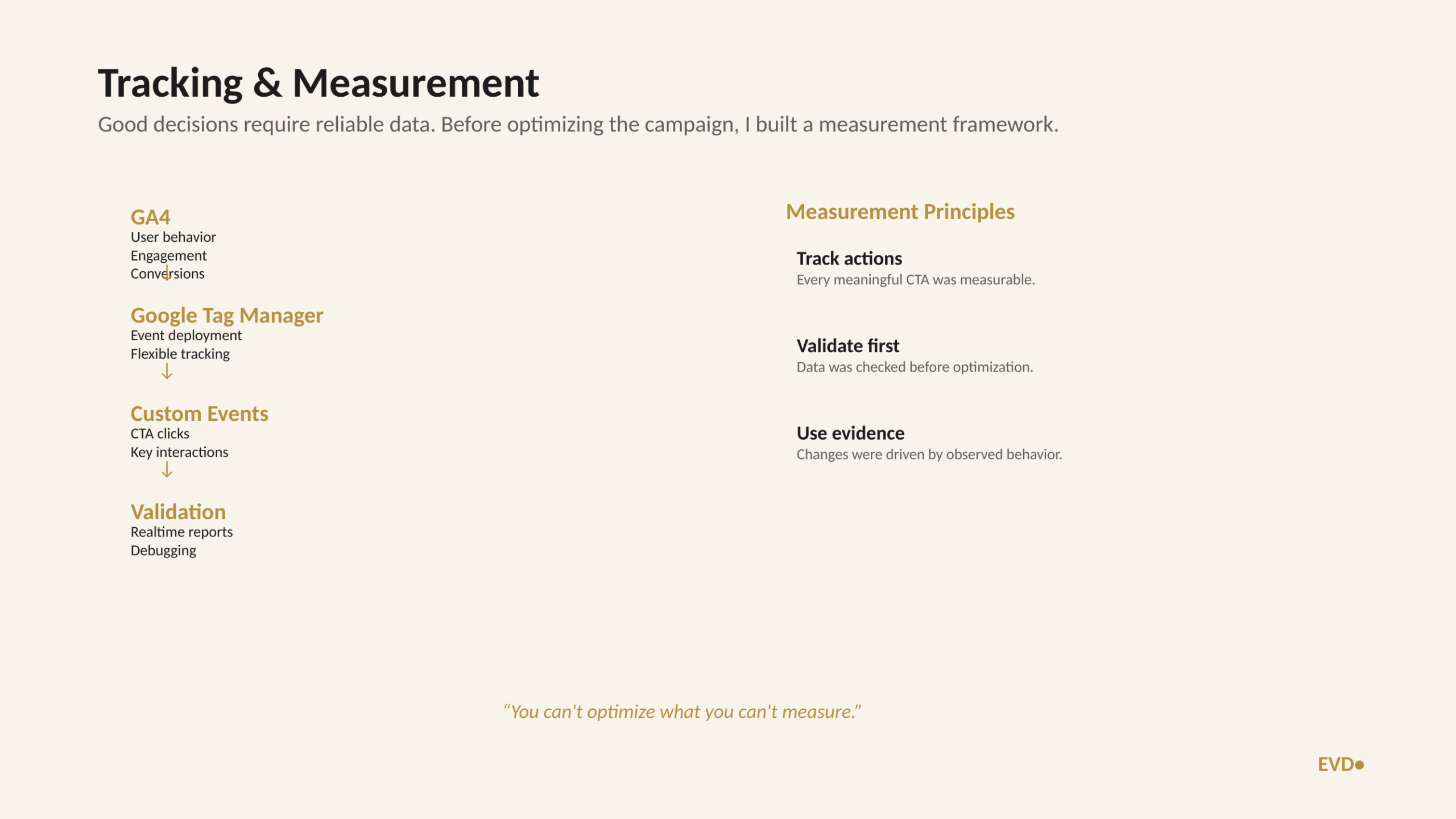
Conversion Tracking
Key website actions were tracked to understand how users moved beyond the click and where meaningful engagement occurred.
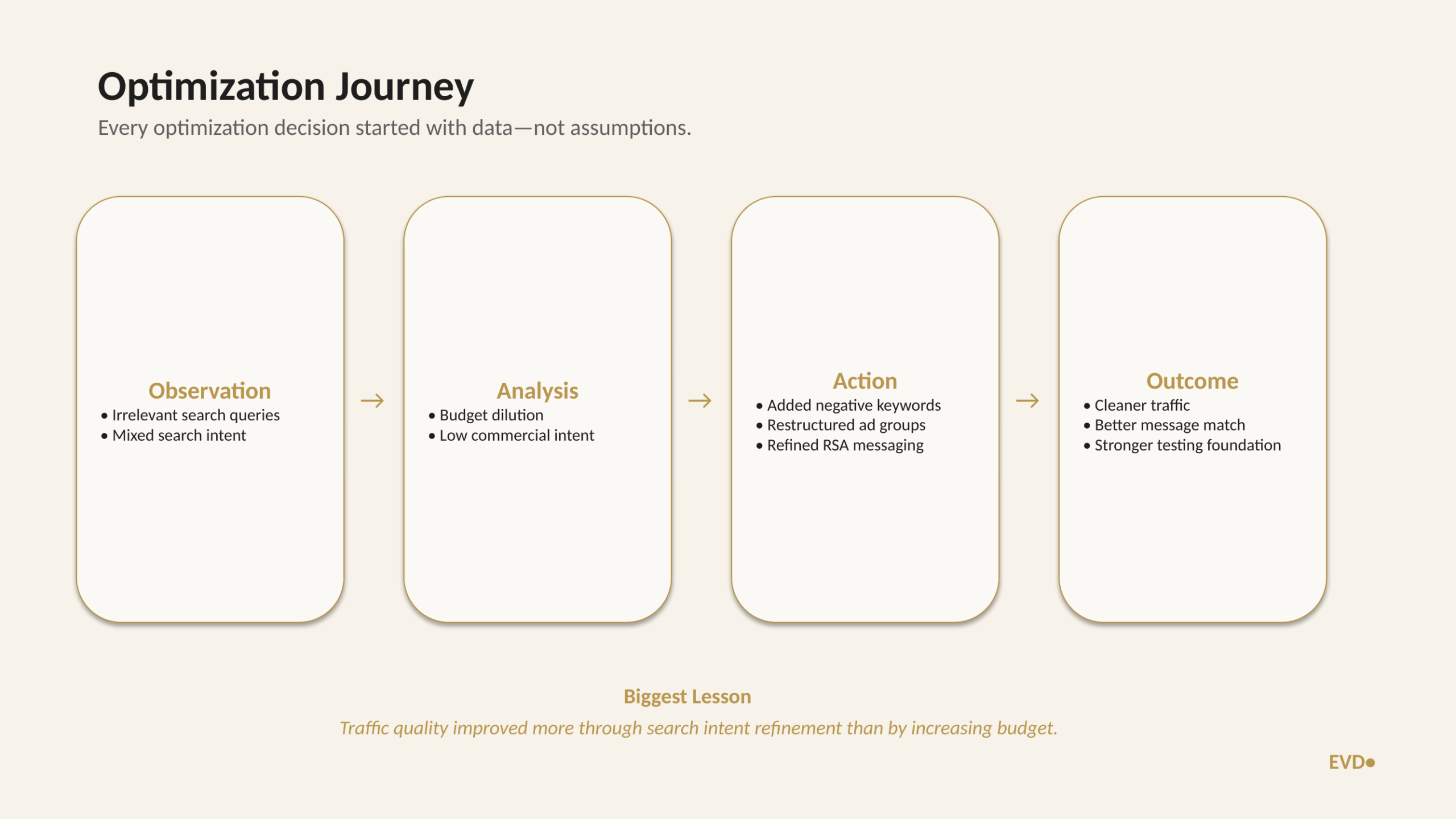
Continuous Optimization
Search terms, click behavior, and campaign performance were reviewed regularly to guide refinements and reduce wasted spend.
The Execution
Turning the strategy into a live campaign.
The campaign was launched with a focused structure, a limited set of high-intent keywords, responsive search ads, supporting assets, and a measurable conversion framework. Each component was designed to make performance easier to interpret and improve over time.
The Performance
Early signals revealed both momentum and friction.
The campaign generated meaningful engagement and provided early evidence that the messaging and search intent were aligned. At the same time, the data identified opportunities to strengthen the post-click customer journey and improve conversion performance.
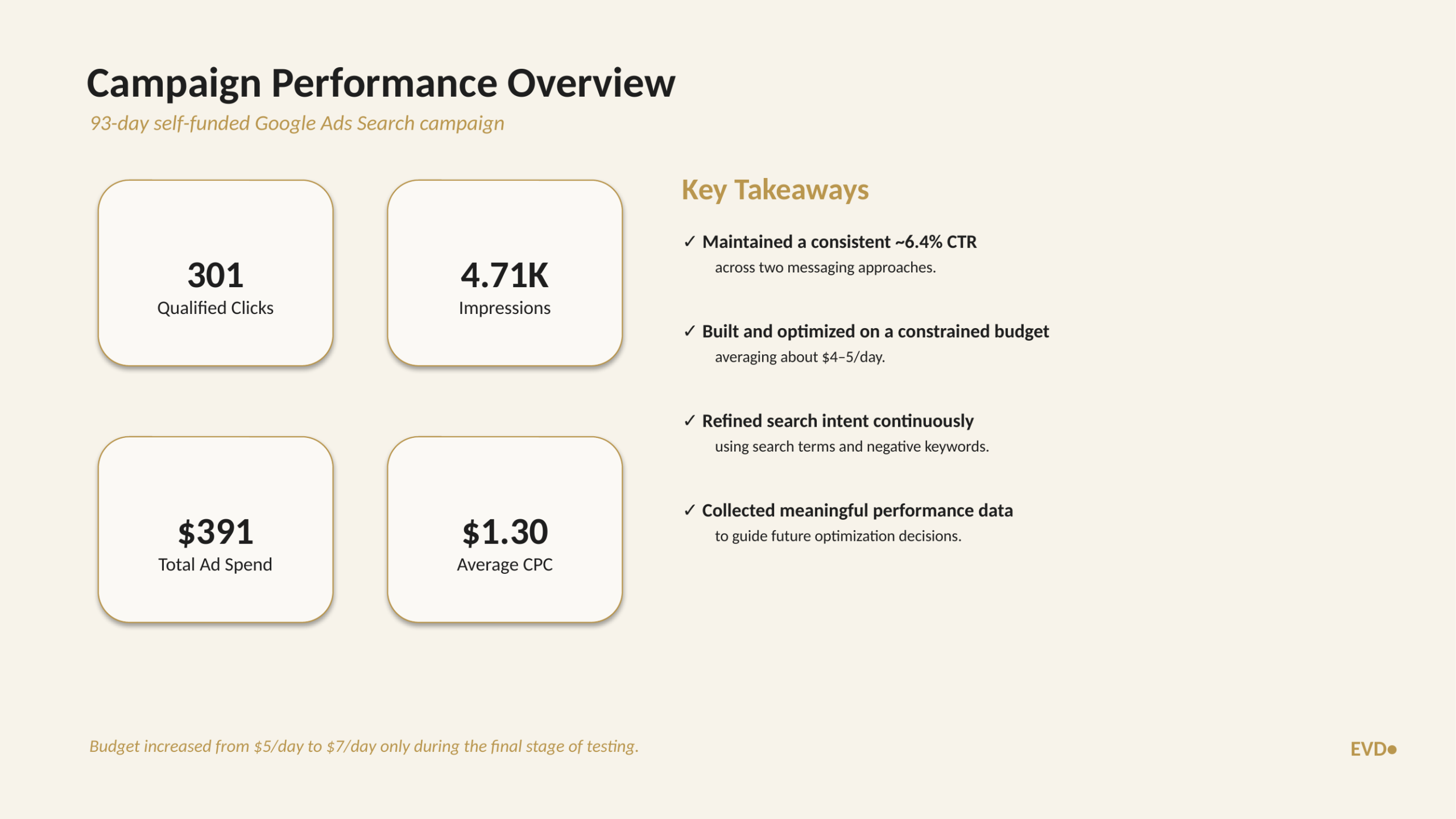
6%+ CTR
Consistent click-through performance indicated that the messaging and search intent were well aligned.
8–13% Peak CTR
Several days produced especially strong engagement after the campaign structure was refined.
2 Tracked Conversions
Conversion tracking confirmed that users were taking measurable actions beyond the initial click.
Clear Optimization Direction
The data revealed where the customer journey needed improvement.
The Insight
The ads were creating interest. The post-click journey needed refinement.
Performance data showed that the campaign was successfully generating interest, while the post-click experience was not yet converting that interest into stronger business outcomes.
The Decision
Paused based on evidence, not failure.
The initial testing phase produced enough data to identify the next priorities. Rather than continuing to spend before improving the post-click experience, the campaign was paused for strategic evaluation.
The decision protected the budget and created a clearer roadmap for the next phase of testing.
The Takeaway
Better decisions create better performance.
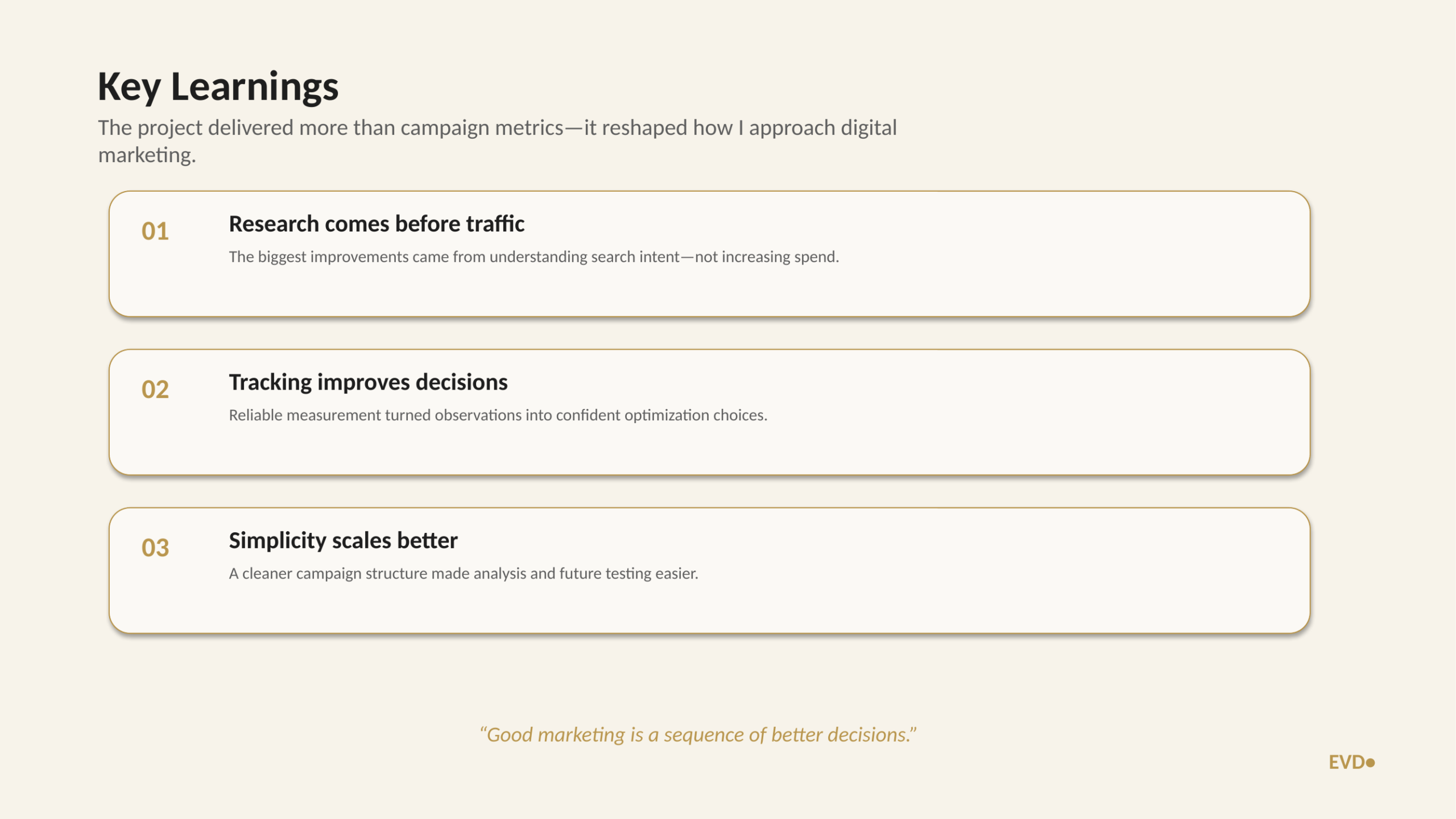
A campaign should do more than generate clicks. It should reveal how people respond, where the customer journey loses momentum, and what should be improved next.
The value of the test was not only in what happened, but in the quality of the decisions the evidence made possible.
Looking for clearer answers about your marketing?
EVD• Marketing helps businesses connect strategy, performance data, and customer behavior to make smarter growth decisions.